
Roofing materials
Flat roofing and TPO in Denver
TPO is a white or light-colored single-ply membrane with heat-welded seams, used on flat and low-slope roofs from porch roofs to large commercial buildings. Its performance depends heavily on drainage and on what sits beneath it.
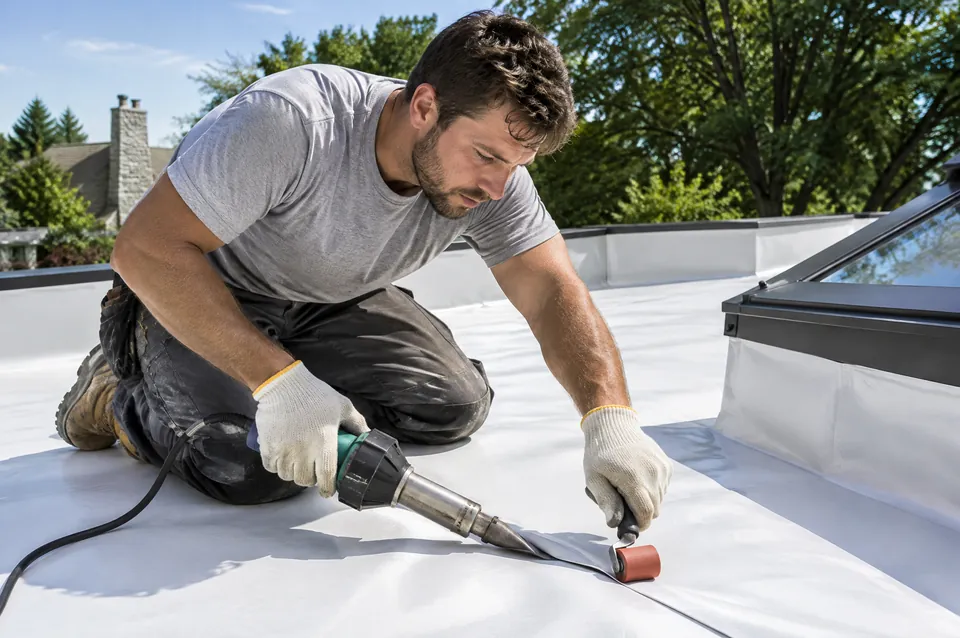
- SeamsWelded with hot air, then probed
- Enemy number oneWater that sits after a storm
- Under the membraneInsulation and cover board take hail
What TPO is, and its neighbors
Thermoplastic polyolefin (TPO) comes in wide rolls that are mechanically attached or adhered over insulation, with overlapping seams fused by a hot-air welder. Its reflective surface keeps the roof cooler in summer. Other low-slope options include PVC, another heat-welded single-ply; EPDM, a rubber membrane with taped or glued seams; and modified bitumen or built-up roofing in layered asphalt systems. On houses, low-slope sections typically show up as porch roofs, dormers, additions and modern flat-roof designs.
When a membrane is the right choice
Any roof section too flat for shingles, tile or most metal needs a membrane. A common Denver example is the shallow porch roof on an older bungalow that has been covered in shingles and leaks every spring. Another is the low-slope roof on a modern infill home, where the design depends on parapets and interior drains.
Trade-offs for Front Range roofs
Advantages
- Welded seams, done well, are continuous and strong.
- Reflective surface reduces summer heat gain under strong sun.
- Light weight and large sheets cover big areas with few seams.
- Easy to add walkway pads for rooftop equipment access.
Drawbacks
- A horizontal surface takes hail head-on; punctures or fractured insulation underneath are possible.
- Ponding water speeds aging and freezes in winter.
- Seams, edges and penetrations need regular checks; most leaks start there.
- Product formulations vary, so performance differs between manufacturers.
Drainage first
On a low-slope roof, the slope that matters is often created by tapered insulation rather than the framing. Water should reach drains, scuppers or edge gutters within a reasonable time after a storm. In Denver winters, standing water becomes ice that holds snowmelt behind it; in summer, short heavy storms can overwhelm a single small drain. A new membrane over a roof that ponds will wear out sooner in those same low spots.
Hail, sun and the layers underneath
A high-density cover board between the insulation and the membrane spreads hail impact and resists crushing from foot traffic. Thicker membranes resist puncture better. Some membrane assemblies carry an impact rating under specific tests; read which test and which assembly the rating applies to, since it usually depends on the layers below. At Denver's elevation the membrane gets more UV than at sea level [S10], so the manufacturer's weathering data and warranty terms are worth reading closely.
What the work includes, and does not
A membrane job covers removing the old roof where needed, checking and replacing wet insulation, installing tapered insulation where drainage needs correcting, cover board, membrane, flashing at walls, curbs and penetrations, and edge metal. Seams are probed after welding. Rooftop equipment may need to be lifted by its own contractor, and new penetrations need a permit in Denver [S2].
Questions to ask
- Membrane type and thickness, and attachment method.
- Is there a cover board? Of what?
- How will ponding areas be corrected?
- How are seams tested before closeout?
- Manufacturer and workmanship warranty terms, in writing. Service life varies by product; ask for the manufacturer's spec.
Questions people ask
- How much standing water is too much on a flat roof?
A thin film that evaporates soon after a storm is common. Water that remains for a couple of days points to a drainage problem worth correcting, because it accelerates wear and becomes ice in winter.
- Can a TPO roof be repaired after hail?
Small punctures and damaged seams can often be patched by welding on new membrane. If hail crushed the insulation or cover board underneath, those sections may need to be opened and replaced.
- Is white TPO a problem under Denver snow?
Snow sits on any low-slope roof regardless of color. Reflectivity helps mainly in summer. Winter performance depends on drainage, insulation and the load capacity of the structure, which is set by the adopted code for that building.
Sources
- S2 City and County of Denver: Roofing Guidelines and Checklist (PDF; older code edition)
- S10 U.S. EPA: A Guide to the UV Index (PDF)
Rules change. Confirm current requirements with Denver Community Planning and Development or your own city or county building department. This is general information, not legal advice. Last reviewed November 2026. How we research these pages.