
Low-slope and commercial buildings
Commercial roofing in Denver
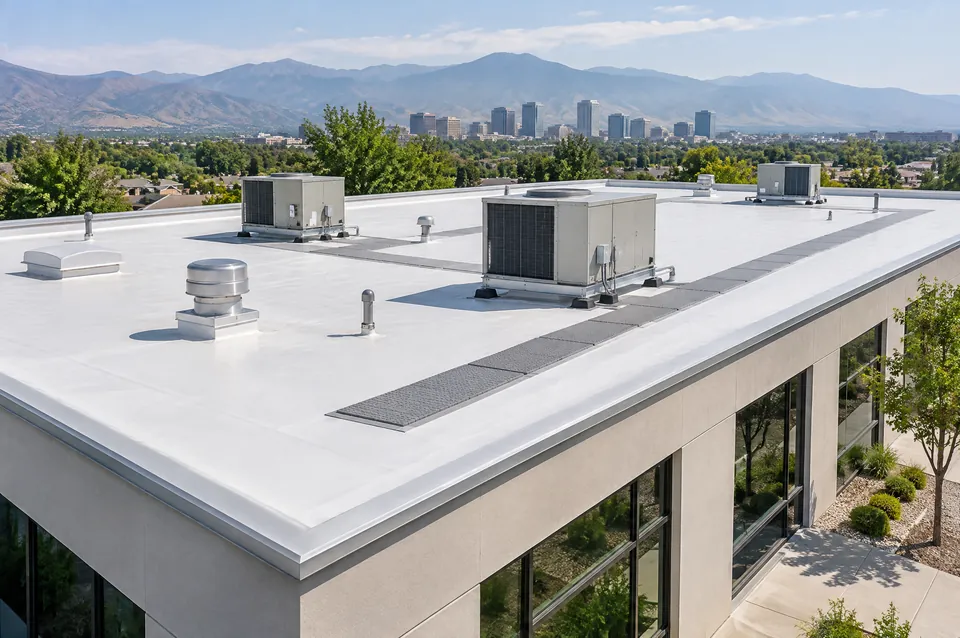
Commercial roofs are mostly low-slope, crowded with equipment, and expected to keep a business running underneath them. The work is as much about drainage, access and scheduling as it is about the membrane.
- Size thresholdDenver sends buildings over 25,000 sq ft to full plan review
- Rooftop unitsNew penetrations need their own permit
- Occupied buildingsPhasing and noise are planned with you
The buildings we mean
Retail strips, small office buildings, light industrial units, churches, restaurants and apartment buildings with flat or nearly flat roofs. Most carry single-ply membranes such as TPO, built-up or modified bitumen systems, or a mix where an older section meets a newer addition. Almost all of them share the same hazards: water that does not leave the roof quickly, equipment curbs and pipes that puncture the membrane, and foot traffic from other trades who are not thinking about the roof.
Warning signs on a low-slope roof
- Water still standing a couple of days after a storm, especially around drains and scuppers.
- Membrane seams that have opened, or patches on top of patches.
- Blisters, wrinkles or soft areas underfoot, which can mean wet insulation below.
- Rust or failed sealant around rooftop unit curbs and pipe supports.
- Interior stains near columns or walls, where water travels along structure.
Denver conditions on a commercial roof
A flat roof faces the sky all day, so the high-altitude sun works on it without the shade a pitched roof gets on one side. Hail strikes a horizontal surface squarely. Dry air and large day-to-night swings stress seams and the metal edge details where the membrane terminates. In winter, snow drifts against parapets and taller walls; how much load a roof must carry is set by the building code the jurisdiction has adopted and verified for that specific structure, which is engineering, not a rule of thumb. Interior drains freeze last and thaw first, and a frozen drain with meltwater behind it is a common winter leak.
Permits and review
In Denver, the quick permit for re-covering existing roofs is limited: buildings over 25,000 square feet, and any work that changes structure, go through full plan review [S1]. Every new roof penetration, including a new rooftop unit, pipe or solar mount, needs a permit [S2]. Contractor licensing is also local; Denver issues its own licenses and supervisor certificates, with Class D certificates covering roofing, and the Roof Covering/Waterproofing category applies to both commercial and residential work [S4]. Buildings outside Denver follow their own city or county process. Confirm current requirements before planning a schedule.
How we approach a commercial project
- Walk the roof and the top floor with your facilities contact, noting drains, equipment, previous repairs and interior damage.
- Moisture check. Where we suspect wet insulation, cores or other testing can confirm it; wet insulation generally needs replacing, not covering.
- Written options. Repair, recover or replace, with what each includes and leaves out.
- Logistics plan. Crane or hoist location, tenant notices, hours, odor and noise, and protection for rooftop equipment.
- Closeout. Photos, as-installed notes and any warranty paperwork that applies, for your records.
Limits: we are not mechanical contractors, so disconnecting or resetting HVAC units is coordinated with your HVAC provider. Structural questions go to a licensed engineer.
Before you ask for a proposal
- Roof area, if you have drawings, and the age of each section.
- Any existing warranty: who issued it and what it requires for repairs to stay covered.
- A leak log: dates, locations and the weather at the time.
- Access rules, tenant hours and who signs off on scope.
Questions people ask
- Can a commercial roof be recovered instead of torn off?
Sometimes. A recover can work when the existing insulation is dry and the deck is sound, and when code allows another layer. Wet insulation under a new membrane traps moisture and shortens its life, so testing comes before that decision.
- How often should a commercial roof be checked?
Twice a year suits the Denver cycle: in spring, clear drains and scuppers before thunderstorm season; in fall, look for hail, seam and flashing damage before freeze-thaw starts. Add a check after any significant hail or wind event. If you set up recurring visits, what each one includes should be written down.
- Will work disrupt my tenants?
Some disruption is unavoidable: noise, deliveries, and sometimes odor from adhesives. We plan phases, hours and notices with you in advance, and identify which areas below the work need protection.
Sources
- S1 City and County of Denver, Community Planning and Development: E-permits Application Guide
- S2 City and County of Denver: Roofing Guidelines and Checklist (PDF; older code edition)
- S4 City and County of Denver, Community Planning and Development: Contractor Licensing
Rules change. Confirm current requirements with Denver Community Planning and Development or your own city or county building department. This is general information, not legal advice. Last reviewed November 2026. How we research these pages.