
Houses, townhomes, small multi-family
Residential roofing in Denver
A roof is a system, not a layer of shingles. We look at decking, underlayment, flashing, ventilation and drainage together, because on the Front Range a weak link in any one of them shows up quickly.
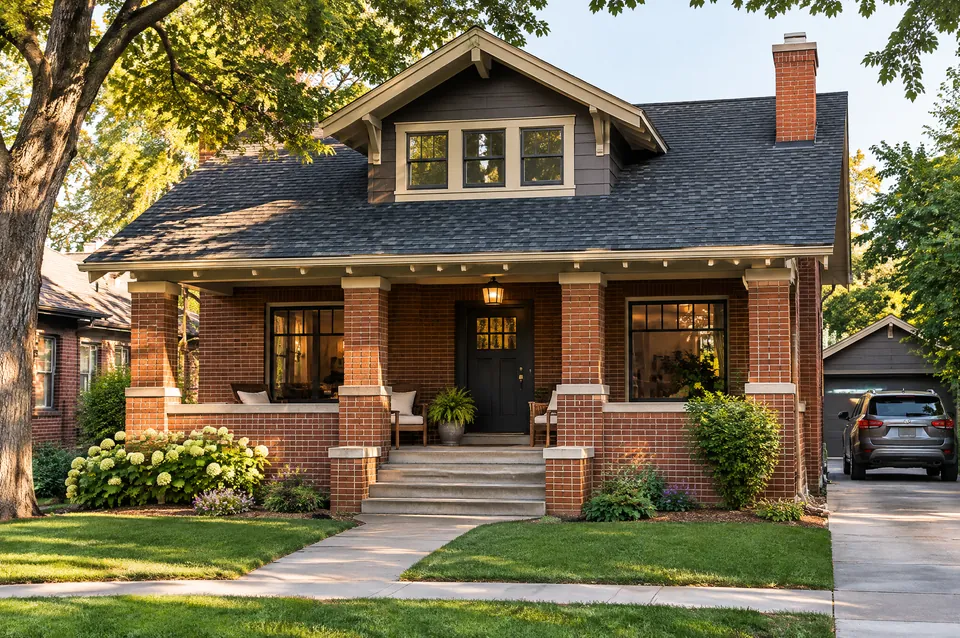
- Typical homesBungalows, foursquares, ranches, split-levels, townhomes
- PermitsDenver offers a quick permit for re-covering existing roofs
- Historic blocksLandmark districts add a design review step
What residential roofing covers
Most Denver-metro homes fall into a handful of shapes: early brick bungalows and foursquares with steep main roofs and low porch roofs, mid-century ranches with long shallow slopes, split-levels with several roof planes meeting at awkward angles, and newer townhome rows where one roof is shared by several owners. Each shape fails in its own places. Porch roofs pitched too low for shingles leak at the wall line. Split-levels collect snow and debris where planes meet. Townhome rows raise the question of who owns which section before any work starts.
Our residential work ranges from small repairs to complete re-roofs, plus gutters and the flashing details that tie them together. Whatever the size of the job, the starting point is the same: an inspection, photos, and a written scope that names the parts of the roof being touched and the parts that are not.
Signs a house needs attention
- Ceiling stains on the top floor, especially after spring snow melts or a heavy afternoon storm.
- Granules collecting at downspout outlets, or bare dark patches on the shingle surface.
- Shingle tabs that lift, crease or are missing after a windy day.
- Daylight or damp insulation visible from the attic around vents and chimneys.
- Icicles that form in the same spot every winter, which often points to heat escaping into the attic.
How Denver weather shapes the job
The house sits a mile up, so the sun is harder on exposed materials than at sea level; that argues for checking the condition of rubber pipe boots and sealant joints on every visit, not only the shingles. Big swings between cold nights and warm afternoons move the deck and flashing around more than people expect. In winter, poorly ventilated attics warm the roof deck, melt snow from below and refreeze it at the eaves. Good attic airflow and an ice barrier at the eaves matter as much as the roof covering itself.
Snow load is not something to guess at. The load a roof must carry is set by the building code the jurisdiction has adopted, and it is verified for the specific building. If you are adding weight, for example switching to tile, that check comes first.
Permits, districts and HOAs
In Denver, a "Roofing and Siding Quick Permit" covers replacing or repairing the exterior roof covering on an existing building without plan review; it focuses on weatherproofing rather than structural change, and compliance is checked at a field inspection [S1]. Changes to structure go through full plan review. If the home is an individual landmark or sits inside a historic district, the reroof needs Landmark Preservation review, and changing the material can mean a Commission review [S3]. Homeowner associations often have their own color and material rules on top of that; bring a copy if you have one.
Outside Denver, each city and county runs its own permit process. Confirm with your own building department.
What our process covers, and its limits
We inspect what can be safely reached and seen, document it, and recommend a scope. We do not open walls or ceilings during an inspection, so hidden rot or framing problems may only show once old roofing is removed; your contract should explain how that kind of discovery is priced and approved before work continues. We do not do structural engineering; if framing or snow-load capacity is in question, an engineer's review is the right call.
What to prepare
- The approximate age of the roof and any paperwork from past work.
- Notes or photos of where and when leaks appear.
- HOA rules, landmark status, or shared-roof arrangements if they apply.
- Attic access cleared, if you are comfortable with us looking inside.
Questions people ask
- Do townhome owners need the whole row re-roofed at once?
Not always, but shared roofs complicate partial work. Who is responsible for which section is set by your HOA documents or deed, and matching materials and tying new roofing into an old neighbor section needs careful flashing. Start by confirming ownership and HOA approval.
- My bungalow has a low porch roof. Can it get the same shingles as the main roof?
Often not. Shingles need a minimum slope to shed water, and many porch roofs are flatter than that. A low-slope membrane is commonly the better fit for that section; the inspection will measure the pitch.
- Is a home in a historic district stuck with its original roofing material?
Not necessarily, but in Denver a reroof on a landmark or in a historic district needs Landmark Preservation review, and changing materials, including to synthetic look-alikes, may require Commission review. Plan extra time for that step.
Sources
- S1 City and County of Denver, Community Planning and Development: E-permits Application Guide
- S3 City and County of Denver, Landmark Preservation: Roofing Design Review
Rules change. Confirm current requirements with Denver Community Planning and Development or your own city or county building department. This is general information, not legal advice. Last reviewed November 2026. How we research these pages.