
Leaks, flashing, wind and ice
Roof repair in Denver
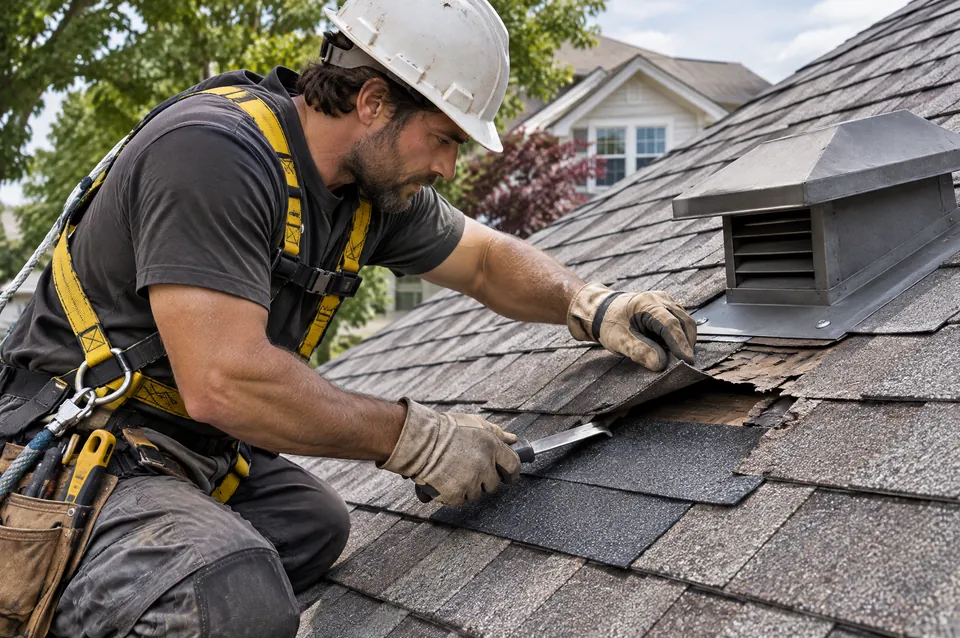
Most leaks start at a detail, not in the middle of a slope: a cracked pipe boot, a lifted shingle, a gap in step flashing. A good repair finds the actual entry point, which is often not directly above the stain.
- Most commonPipe boots, flashing, lifted tabs, ice-dam leaks
- Permit triggerLarger repairs and any new penetration need a permit in Denver
- Honest answerSometimes a repair is not worth the money
Tracing a leak
Water runs along the top of the underlayment, down rafters and across the attic floor before it shows up on a ceiling. So the brown ring over the dining room might come from a vent six feet uphill. We start in the attic when there is access, looking for darkened decking, rusted nail tips and wet insulation, then match that to what we see on the roof. Timing is a clue too: a leak only during wind-driven rain points to flashing or siding joints, while one that shows up on sunny days after snow usually means ice at the eaves.
Repairs we see most on Front Range roofs
Cracked pipe boots and vent collars
The rubber collar around plumbing vents takes direct sun all year. With UV running higher at altitude than at sea level [S10], these collars can split well before the shingles around them wear out. Replacing a boot is a small job; catching it before it rots the deck is the point.
Wind-lifted and missing shingles
Chinook and downslope wind events can break the seal strip under shingle tabs. Once a tab lifts, the next gust tears it off. Repair means replacing the damaged pieces and re-sealing neighbors whose bond has failed, not just nailing the old ones down.
Flashing at walls, chimneys and skylights
Step flashing and counter-flashing move with every hot afternoon and cold night. Caulk that was used in place of real flashing dries out quickly in Denver air. Proper repairs replace the metal and tuck it behind the siding or into the masonry joint.
Ice-dam damage
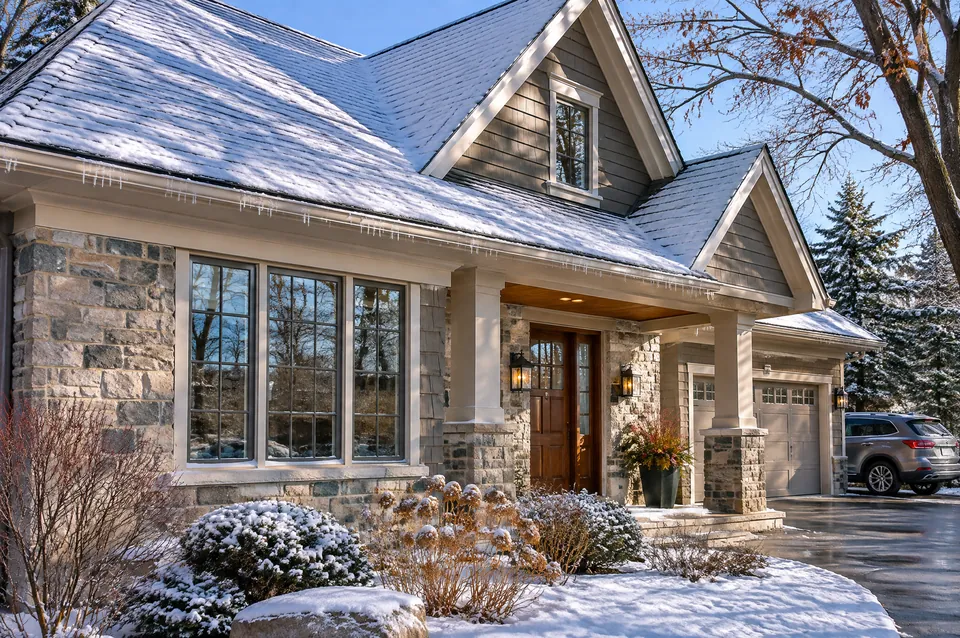
When snow melts from attic heat and refreezes at a cold overhang, water backs up under the shingles. Repairing the stained drywall without addressing ventilation, insulation and an ice barrier at the eaves usually means repeating the repair next winter.
Repair permits in Denver
Denver's roofing guide says that, for buildings under 25,000 square feet, a repair over 10% of the roof area or two roofing squares, whichever is smaller, needs a permit, and every new roof penetration, such as a skylight, pipe, rooftop unit or solar mount, needs one too. In that guide, roof coatings did not require a permit [S2]. The guide predates the current code, so treat this as a starting point and confirm with the city. Other jurisdictions set their own thresholds.
Temporary protection
If water is coming in now, the immediate goal is limiting damage: move belongings, catch drips, and, if it can be done safely, cover the area with a tarp secured so it will not blow off. Do not climb onto a wet or icy roof. A tarp is a stopgap until a proper repair, not a fix.
What a repair visit covers, and what it does not
A repair estimate names the area, the cause we believe is responsible, and the parts being replaced. It does not cover the rest of the roof; if we see other problems, we note them separately so you can decide. Because a repair touches only part of an aging system, it carries less certainty than new work. When the roof is near the end of its service life, we will say so and price both options.
Helpful details to share
- When the leak appears: during rain, during wind, after snow, or on sunny days.
- Photos of ceiling stains and anything you can see from the ground.
- Any previous repairs in that area and who made them.
Questions people ask
- Why does my roof only leak in certain storms?
Direction matters. Wind-driven rain from one side can push water under a flashing detail that stays dry in a straight-down shower. Note which way the wind was blowing when the leak appears; it narrows the search.
- Can you match my existing shingles for a repair?
Sometimes closely, sometimes not. Product lines change, and older shingles fade in the sun. We try to source the nearest match and will tell you in advance if the patch will be visible.
- Is roof coating a good alternative to a repair?
Coatings have a place on some low-slope roofs, but they do not fix failed flashing, wet insulation or a damaged deck. On a steep shingle roof, a coating is rarely the right answer to a leak.
Sources
- S2 City and County of Denver: Roofing Guidelines and Checklist (PDF; older code edition)
- S10 U.S. EPA: A Guide to the UV Index (PDF)
Rules change. Confirm current requirements with Denver Community Planning and Development or your own city or county building department. This is general information, not legal advice. Last reviewed November 2026. How we research these pages.